HeadCoach Mental Skills Framework

High-Performance Sports Model

Mental Strength • Mental Conditioning • Technical Skills • Tactical Skills • Strategic Skills

+

Building Mental Strength Like Physical Strength

Just as we train our bodies for rugby, we must train our minds. This framework mirrors physical performance development with five key areas that work together to create mental toughness and sustained excellence.

Mental Foundation

Build resilience through structured mental training

Sustainable Performance

Develop endurance for consistent high-level play

Smart Execution

Apply mental skills with precision and purpose

+

Mental Strength: Your Foundation

Mental toughness is like physical strength - it must be built systematically. This foundation helps you stay composed under pressure and bounce back from setbacks quickly.

01

Manage Your State

Stay composed and confident when pressure builds. Learn to recover quickly from mistakes or tough moments.

02

Focus on What You Control

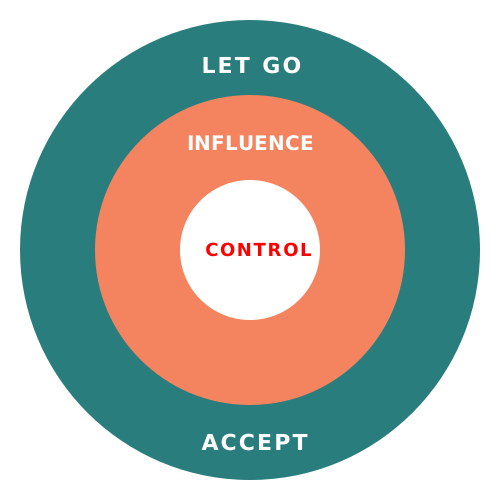
Use the Control | Influence | Accept | Let Go model. Put energy only where you can make a difference.

03

Build Mental Tools

Practice mental movies, positive self-talk, and personal rituals that bring you back to the present moment.

+

Mental Strength Must Haves

  • Step into discomfort intentionally, then recover with purpose
  • Practice mental movies and reframing techniques daily
  • Control | Influence | Accept | Let Go model
  • Develop personal rituals for pressure moments – such as cue words or ritual actions

Mental strength grows through intentional challenge and recovery, just like physical strength.

Control • Influence • Accept

Concentric circles with control at centre, influence, then let go and accept as the outer ring

+

Mental Conditioning: Building Endurance

Mental conditioning is about sustaining high performance over time. Like physical fitness, it requires consistent training and smart recovery strategies.

Mental Endurance

Build focus through visualization, mindfulness, and body awareness training.

Process Focus

Anchor on process over outcome. Bring the horizon forward to now.

Growth Mindset

Reframe failure as learning. Each mistake becomes fuel for improvement.

+

The 1% Club: Daily Mental Habits

Small, consistent improvements compound into major performance gains. Join the 1% club by committing to daily mental training habits.

Daily Mindfulness

5-10 minutes of focused breathing or body check-ins to build mental endurance and awareness.

Mental Movies

Visualise plays and performances, engaging both body and brain in the process, by adding in overcoming adversity.

Reflection Practice

Journal about lessons learned, growth opportunities, and mental performance insights.

Condition mindset like fitness: embed consistency and intentionality in all sessions.

+

Technical Mental Skills: Precision Tools

These are your precision mental tools - specific techniques you can use in training and games to manage thoughts, emotions, and performance states.

1

Mental Routines

Build pre-play rituals, visual anchors, and ways to reframe pressure into power and opportunity.

2

State Management

Use swish patterns to interrupt unhelpful states and replace them with high-performance responses.

3

Mind Movies

Learn to change the “movies in your mind” – adjust how you see situations to change your performance.

4

Communication Model

Understand how thoughts create feelings, which drive actions and ultimately determine results.

+

Tactical Mental Skills: Smart Game Thinking

Mental tactics help you think smarter during games. These skills improve decision-making under pressure and expand your awareness on the field.

Peripheral Expansion

Widen your awareness like a playmaker. See more of the field and more opportunities.

Perspective Shifting

View situations from different perspectives to open up more choices and better decisions.

Decision Processes

Build simple decision-making models. Understand decisions as processes, not just reactions.

+

Strategic Mental Framework: Long-Term Success

Mental strategy connects your daily actions with long-term goals. It's about building sustainable excellence and leadership both on and off the field.

1

Mental Blueprint

Align daily habits with long-term vision using well-formed goals and the POWER model.

2

Motivation Mastery

Understand your motivation patterns (towards/away from) and use them consciously.

3

Self-Leadership

Develop leadership skills: giving feedback, resolving conflicts, and having performance conversations.

This strategic approach helps create mental structures that sustain excellence under pressure, moving beyond fear and hope into enacted courage.

+

Courage in Action

Performance isn't just about physical execution - it's about creating mental structures that sustain excellence under pressure.

Focus on Now

Ground yourself in what you can do in this moment.

Train Daily

Build mental fitness through consistent practice.

Lead Yourself

Take ownership of your mental development journey.

This framework keeps us out of fear and hope and grounds us in courage: the enacted presence to focus on what we can do now.

+